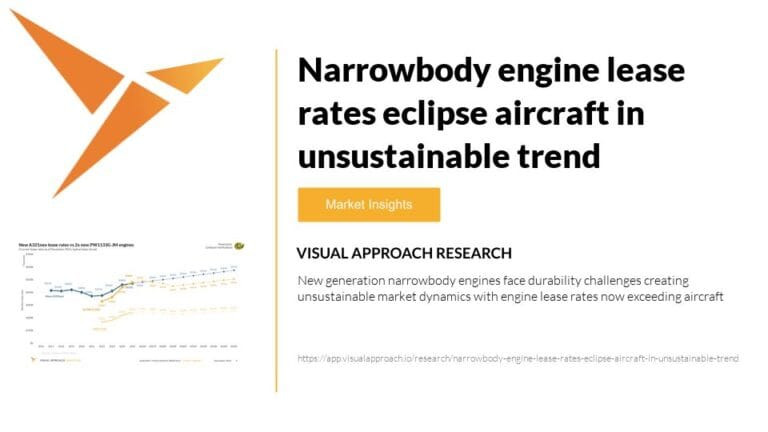
- Engine lease rates are now exceeding full aircraft values, accelerating early teardowns and tightening feedstock supply for freighter conversions.
- This shift is reshaping fleet strategies across the air cargo sector, as operators navigate rising engine costs and shrinking aircraft availability.
Aircraft are being dismantled earlier than ever—because their engines are simply worth more. That’s the core finding from the latest Market Insights report by Visual Approach Analytics, which underscores a growing tension in the aviation asset market that is beginning to shape decisions across the cargo sector.
“Should we be surprised by six-year teardowns if two engines are worth more than the combined aircraft?” asked Courtney Miller, Managing Director at Visual Approach, in a recent post to subscribers. The data-backed analysis, developed with ISTAT-certified appraiser Gueric Dechavanne, suggests the market is no longer operating on traditional fleet timelines.
This isn’t just a leasing issue. With engine lease rates outstripping airframe value in many cases, aircraft are being retired not because they are no longer useful, but because the value of their parts—specifically engines—can no longer be ignored.
The trend is most pronounced in high-demand narrowbody types, where the scarcity of available engines is feeding into MRO bottlenecks and driving up short-term lease prices. Cargo operators, particularly those relying on 737NGs, A321s, or 757s, are caught in the middle. While the broader market is just catching up, some players are already reshaping procurement and fleet strategies based on what the numbers are signalling.
For the air cargo industry, where converted freighters make up a significant share of narrowbody capacity, the shift could tighten the pool of viable feedstock. Aircraft once assumed to be future conversion candidates may now be parted out well before reaching their expected lifecycle.