
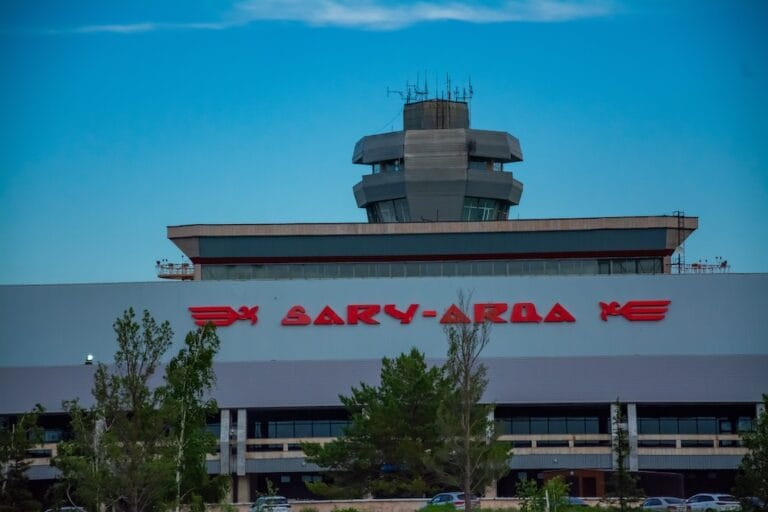
- Kazakhstan’s Sary-Arka Airport is executing a long-term transformation to grow annual cargo volumes from 15,000 to 200,000 tonnes, positioning Karaganda as a strategic Europe–Asia logistics bridge amid shifting global air routes
- The plan includes major infrastructure upgrades such as a rebuilt wide-body runway, Class A warehouses, a new Jet A-1 fuel complex, specialised ground equipment, and more than US$270 million in investment, including the launch of a new Kazakhstan-based cargo airline
- A Special Economic Zone with free trade warehousing, tax and customs incentives, and regulatory flexibility underpins the strategy, aiming to attract global logistics partners and build an integrated, future-ready cargo ecosystem
At the heart of Central Asia, Kazakhstan’s Sary-Arka Airport is embarking on a transformational plan to become a key cargo hub, increasing its annual cargo throughput from 15,000 tonnes to 200,000 tonnes by the end of this decade.
“We are building not just for today, but for the next 50 years,” Ruslan Gabbasov, Managing Director of Sary-Arka Airport, said. “Our vision is to position Karaganda as a key player in global logistics, particularly as an effective and efficient bridge between Europe and Asia.”
With shifting global air routes and increased demand for diversified freight corridors, Sary-Arka Airport’s location is proving to be a critical asset. “The recent closure of certain traditional air corridors has redirected up to 25 percent of Europe–Asia cargo traffic through Kazakhstan. We responded quickly by offering refuelling and cargo transfer capabilities that have gained the trust of several international operators.”
Gabbasov emphasised that this evolution is not about playing catch-up, but rather anticipating the logistics needs of the future. “Our cargo infrastructure will be future-ready—digitally enabled, green, and seamlessly connected. We are focusing not only on capacity but on speed, quality, and sustainability.”
Upgrading to global standards
The physical transformation of Sary-Arka Airport is already well underway. One of the flagship upgrades is the complete reconstruction of the airport’s runway to accommodate wide-body, heavy cargo aircraft with improved handling capacity and efficiency.
“Our runway renovation is pivotal,” Gabbasov explained. “It’s being rebuilt to handle the full spectrum of international cargo aircraft—ensuring we can serve everything from standard freighters to the largest heavy hauliers.”
In tandem, construction is progressing on Class A warehouse facilities built to modern logistics standards. “These warehouses will offer high ceilings, temperature control, fast access to customs, and automated systems that improve throughput and inventory handling.”
One of the most critical upgrades is the development of a new jet fuel complex built to international Jet A-1 standards. “We’ve prioritised fuel infrastructure to ensure we can reliably support 24/7 cargo operations, including for our international partners,” Gabbasov noted. “Fuel supply should never be a bottleneck.”
The airport is also acquiring a new fleet of specialised equipment for aircraft servicing, runway clearing, apron maintenance, and cargo handling. “We are leaving no stone unturned. Our equipment needs to match the ambition of our infrastructure.”
According to Gabbasov, these improvements aim to provide not only capacity, but resilience and flexibility. “Infrastructure is the foundation of logistics performance. If we are to attract and retain global partners, we must offer not just space, but certainty, speed, and safety.”
Leveraging investments
The scale of transformation at Sary-Arka Airport is matched by the scale of its investment. A total of over US$270 million has been earmarked to turn the airport into a multimodal cargo powerhouse.
“Out of the US$270 million, about US$70 million is being invested directly into airport infrastructure,” Gabbasov expressed. “That includes the runway, warehouses, the new fuel complex, and essential equipment. This investment builds a solid foundation for sustainable growth in cargo traffic.”
The remaining US$200 million is being channelled into the creation of a brand-new Kazakh cargo airline headquartered in Karaganda. “This is a major initiative. The new airline will focus on the underserved Europe–Asia corridor, where limited commercial flight rights on some routes, especially through China, present a real opportunity for us,” he continued.
“We are not only creating an airline, but a full ecosystem that supports route development, fleet expansion, and regulatory navigation. The airline will be a key strategic anchor for our cargo ambitions.”
Gabbasov highlighted plans to attract foreign capital into the venture. “We are actively exploring opportunities to involve international investors in the airline’s capital. We’re offering joint development of the fleet and route network under the attractive preferential conditions available in our Special Economic Zone (SEZ).”
In a market where global hubs are congested and often over-regulated, Karaganda’s flexible operating environment is a powerful advantage: “We can be agile where others are rigid. That’s how we will compete and win.”
Free trade zone
As the airport embarks on its future course, it has established a Special Economic Zone (SEZ) that offers significant operational and fiscal incentives to logistics operators and investors.
“Our SEZ includes a free trade warehouse, which allows transit cargo to be processed without full customs clearance,” Gabbasov highlighted. “This dramatically reduces delays and simplifies logistics, especially for shipments crossing multiple borders.”
These advantages make Sary-Arka uniquely positioned as a Central Asian entry point. “Karaganda is now an attractive destination for international freight operators because of this streamlined, cost-effective model. It’s a real differentiator.”
The SEZ offers extensive tax and customs benefits, such as exemptions on VAT and import duties, which lower overall operating costs for companies that set up logistics, warehousing, or freight forwarding operations at the airport.
“Our goal is to build a thriving ecosystem within the SEZ,” Gabbasov expressed. “We’re creating a platform where partners—airlines, freight forwarders, warehouse operators—can co-locate, integrate, and scale together.”
This initiative has already drawn international attention. “We’re in active discussions with several global logistics players about long-term partnerships within the SEZ. It’s not just about space—it’s about opportunity.”
As regulatory frameworks continue to evolve in the region, the SEZ gives Sary-Arka a structural advantage. “Being part of Kazakhstan’s forward-looking economic policy allows us to move fast and stay flexible,” Gabbasov added. “That’s essential in modern logistics.”