
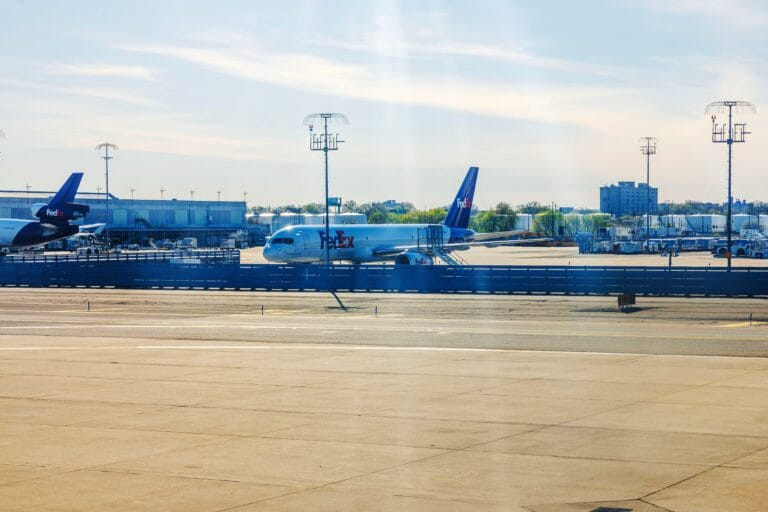
- In 2025, airfreight reached a turning point with widespread adoption of digitalisation, AI, and IoT, driven by IATA’s ONE Record standard, rapid e-commerce growth, and stronger focus on sustainability and real-time visibility
- In 2026, the industry will shift toward enforced digital compliance through e-AWB rollout, more disciplined capacity deployment, long-term contracting, and deeper integration of SAF and carbon-tracking to meet ESG expectations
- Opportunities and challenges will centre on securing reliable capacity amid trade rerouting, with growth in emerging corridors and secondary hubs favouring operators that combine digital readiness, strategic partnerships, and regional agility
The defining moment for the airfreight industry in 2025 was the widespread adoption of digitalisation and AI-driven logistics, anchored by IATA’s ONE Record standard and the explosive growth of e-commerce. This year, airfreight advanced through predictive analytics, AI tools, and IoT sensors are becoming standard across global cargo operations. IATA’s ONE Record initiative served as a major catalyst, enabling seamless data exchange and real-time visibility. AI applications such as Apollo and Quantum enhanced route planning and capacity management, while IoT sensors transformed specialised cargo handling—particularly animal transport—by monitoring temperature, humidity, and movement in real time.
E-commerce simultaneously surged, with platforms like TikTok and Instagram fuelling demand for high-volume, small-parcel flows. DHL noted that 75 percent of consumers now rely on social platforms for purchasing decisions, reshaping expectations for speed and transparency. Sustainability also strengthened its foothold, with increased investment in Sustainable Aviation Fuel (SAF) and carbon-tracking tools, aligning airfreight more closely with global emissions targets.
These converging forces—digitalisation, social commerce, and green logistics—made 2025 a pivotal year in which airfreight shifted from a reactive model to a proactive, technology-enabled backbone of global trade.
What to watch in 2026
In 2026, eyes will be on the full-scale rollout of IATA’s e-AWB compliance and digital cargo documentation, which will formalise the transition to paperless, real-time logistics. With IATA mandating the Electronic Air Waybill, forwarders and carriers will need to digitise or risk exclusion from major trade lanes. The benefits are substantial: real-time visibility, automated customs clearance, faster dispute resolution, and the ability to support dynamic pricing for high-value, time-critical sectors.
The industry will also pivot from chasing volume to securing profitable corridors and long-term block space agreements. As bellyhold capacity returns, freighter deployment will become more selective, making resilient contracting more important than spot-market opportunism.
Sustainability will reach a new threshold as airlines increase SAF uptake, expand carbon-tracking capabilities, and upgrade fleets to meet tightening ESG expectations. The defining moment of 2026 will not be a single event, but a collective movement toward enforced digital compliance, strategic discipline, and sustainability-aligned operations.
What to expect from the industry
Next year, the industry will prioritise strategic capacity management and trade diversification. Expanding bellyhold space will push airlines to redeploy freighters toward high-yield corridors such as China–EU and intra-Asia, trimming weaker routes. Dynamic pricing and long-term block space agreements will become more prominent, compelling forwarders to secure lift earlier.
Geopolitical tension and supply chain risk will accelerate trade rerouting. Shippers are diverting flows to secondary airports, regional hubs, and nearshored locations to avoid chokepoints. Southeast Asia–Middle East alternatives to China–US routes and rising intra-regional Latin American air cargo illustrate this shift.
What hurdles could impact operations
The biggest challenge will be securing reliable capacity amid shifting trade patterns and more selective freighter allocation. As airlines prioritise high-yield corridors, regions dependent on cargo-only lift will face tighter availability and volatile pricing. Dynamic pricing will pressure forwarders to lock in long-term agreements or risk exposure during peak surges. Simultaneously, diversification away from congested or politically sensitive hubs raises operational complexity and demands agile partnership networks. Added regulatory pressures—from customs to ESG compliance—intensify this challenge.
Where will opportunity lie in 2026
The greatest opportunity will be in serving emerging corridors and secondary hubs as trade rerouting accelerates. Shippers are diversifying away from traditional megahubs, creating high-growth lanes such as Southeast Asia–Middle East, Latin America–North America, and intra-Africa. Providers offering reliable lift, customs expertise, and regional agility will secure first-mover advantage. Consolidated uplift, flexible booking, and localised compliance support will become competitive differentiators as nearshoring and friendshoring gain momentum.