
- Softlink Global has advanced its Logi-Sys platform from basic digitisation to intelligence-led automation, embedding AI capabilities that interpret data, predict outcomes, and execute operational actions autonomously.
- The new features focus on process acceleration, predictive analytics, improved ETA forecasting, and the introduction of a “Digital Employee” to reduce manual intervention and enhance decision speed in complex freight operations.
- These upgrades reflect a broader industry shift in air cargo and freight forwarding, where competitiveness is increasingly driven by data intelligence, operational resilience, and AI-enabled service differentiation rather than scale alone.
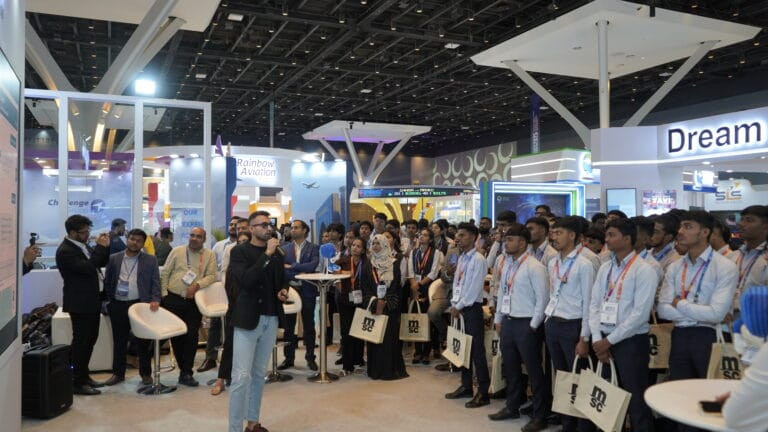
Softlink Global has outlined a new phase in its technology roadmap for freight forwarding and logistics automation, unveiling a suite of artificial intelligence–enabled enhancements to its Logi-Sys platform during the Logi-TECH Spotlight session at IICS 2025. The announcement reflects a broader shift within the air cargo and freight forwarding sector from process digitisation towards intelligence-led operational decision-making.
Speaking at the session, Softlink Global’s Chief Growth Officer, Kunal Maheshwari, positioned the upgrades as a response to growing operational complexity across global supply chains, where speed, predictability and data accuracy have become decisive competitive factors for logistics service providers. The company framed the new capabilities as an evolution from workflow automation to systems that can interpret data, anticipate outcomes and execute actions autonomously.
At the centre of the update is AI-driven process acceleration, using intelligent document-reading tools to automate job creation, purchase bookings and document handling. By reducing manual intervention at early transaction stages, the platform is designed to compress turnaround times and lower error rates—persistent challenges in air cargo and multimodal freight operations.
Softlink also introduced enhanced analytics under its LogiBRAIN framework, which combines predictive modelling, real-time operational dashboards and conversational analytics via an AI interface known as BoxyAI. These tools aim to provide forwarders with actionable insights rather than retrospective reporting, supporting more informed capacity planning and exception management in time-sensitive cargo environments.
Another notable development is predictive tracking visibility, which applies AI models to improve estimated time of arrival (ETA) accuracy. Arrival predictability remains a critical issue in air cargo, particularly for perishables, pharmaceuticals and high-value shipments where downstream supply chains are tightly synchronised. Improved forecasting could help forwarders and airlines mitigate disruption costs and enhance shipper confidence.
Perhaps the most strategic announcement was the introduction of a “Digital Employee”—a continuously active AI agent capable of executing predefined operational tasks in real time. This feature is intended to automate routine decision-making and system updates without human input, addressing labour constraints while improving response times during peak operational periods.
Collectively, the upgrades signal Softlink Global’s intention to reposition Logi-Sys as an intelligence platform rather than a transactional system. As freight forwarders face mounting pressure from margin compression, compliance demands and rising customer expectations, the ability to embed predictive and autonomous capabilities into core operating systems is increasingly seen as essential.
While Softlink did not disclose implementation timelines or customer roll-out details during the session, the announcement aligns with a wider industry trend toward AI-enabled cargo management platforms. For air cargo stakeholders, such developments point to a future in which operational resilience and service differentiation are increasingly determined by data intelligence rather than scale alone.