
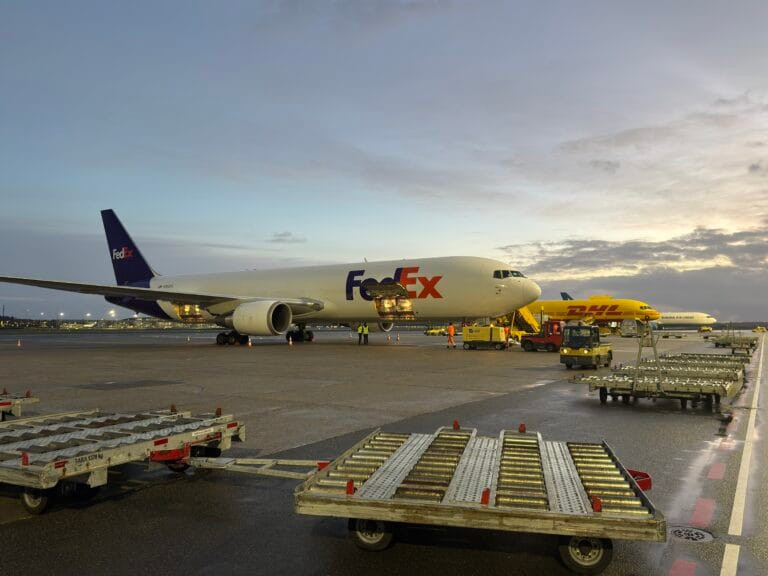
- Billund Airport is experiencing rapid growth in e-commerce cargo, boosting imports and strengthening its position in the Nordic logistics market, supported by efficient customs processes, close trucking partnerships, and dedicated 4,000 sq m e-commerce handling facilities for streamlined depalletisation, customs, and onward distribution.
- Norwegian salmon remains a key export segment, benefiting from efficient sea-to-air routing and upgraded cooling infrastructure, while REST screening technology provides a unique operational advantage by enabling rapid, safe, and efficient cargo security checks.
- To manage longer, less predictable peaks, the airport relies on early capacity planning, scalable processes, and close collaboration with airlines, forwarders, and authorities, while continued investment in infrastructure and Airport City development aims to sustain growth and secure additional freighter capacity.
The rapid expansion of global e-commerce is reshaping air cargo networks across Europe, and Billund Airport is experiencing some of those gains. Over the past several years, cargo volumes tied to online retail have grown at an exceptional pace, positively altering the airport’s traffic profile and strengthening its position in the Nordic logistics market.
According to Billund Airport, e-commerce-driven cargo volumes have increased repeatedly over recent years, supported by efficient customs processes and strong coordination with trucking partners. This combination has made the airport an increasingly attractive entry and exit point for cross-border e-commerce flows, with growth expected to continue in the near term.
“e-commerce has changed the scale and rhythm of our cargo business,” said Kaspar Andreas Nissen, Senior Manager, Air Cargo at Billund Airport. “We have seen volumes multiply over a relatively short period of time, and the underlying demand continues to grow rather than stabilize. That gives us confidence that the current upward trend is not temporary.”
Import flows create new airline opportunities
While Billund Airport has traditionally been strong on exports, import cargo has historically lagged behind in route development. The rise of e-commerce imports is now reversing that imbalance, opening up new commercial opportunities for airlines considering freighter services to and from the airport.
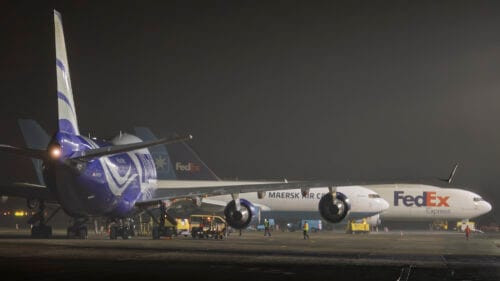
Inbound e-commerce volumes are creating viable business cases for additional routes, prompting the airport to continue developing with airline partners. Although the appetite for new services is strong, the limiting factor is the availability of freighter aircraft capacity rather than demand or ground infrastructure.
“Imports were for many years the more challenging side of our cargo development,” Nissen said. “What we are seeing now is that e-commerce imports fundamentally change that equation. The challenge is no longer demand, but finding the capacity to serve it in a tight global freighter market.”
Dedicated infrastructure supports e-commerce handling
To manage rising shipment volumes, Logistics Service Billund Airport (LSBA) has expanded its operational scope beyond traditional freight forwarding support. The organisation now provides comprehensive e-commerce handling services that cover the full logistics chain from arrival to onward distribution.
A central element of this strategy is a dedicated e-commerce facility covering 4,000 sq m. The building is equipped with four newly constructed lowering stands that allow full pallets to be transferred directly into the facility for depalletisation by Cargo Handling Billund Airport (CHBA). From there, shipments are prepared for customs processing and onward trucking.
“Our focus has been on removing handovers and bottlenecks,” Nissen said. “By co-ordinating depalletisation, customs presentation, and truck loading within one operational flow, we are able to deliver a service that is both fast and predictable for e-commerce customers.”
Norwegian salmon strengthens export mix
Alongside e-commerce, Norwegian salmon continues to be a cornerstone of Billund Airport’s export activity. The volume of salmon exported through the airport has increased significantly in recent years, reinforcing its role as a key perishables gateway for Scandinavian seafood.
Salmon’s high density makes it particularly attractive for freighter operators, as it enables optimal utilisation of aircraft payload capacity. Most shipments originate in Norway, are transported by sea to Hirtshals in northern Denmark, and then trucked to Billund Airport within a matter of hours before being uplifted by air.
“Salmon is an ideal cargo for us because it balances both weight and volume on freighters,” Nissen said. “The routing via northern Denmark has proven to be extremely efficient, and with our upgraded cooling facilities we are well prepared to handle continued growth in this segment.”
REST screening sets a global benchmark
One of Billund Airport’s most distinctive advantages lies in its handlers, CHBA, use of the REST (Remote Explosive Scent Tracing) screening method. As one of only two airports worldwide authorized to use this technology, Billund has gained a significant operational edge in cargo security and efficiency.
REST screening allows air samples to be taken from sealed cargo units and analysed by specially trained dogs, eliminating the need for physical opening or repositioning of shipments. Entire truckloads can be screened in approximately 20 minutes, significantly reducing handling time and improving working conditions.
“REST screening has changed the way we think about cargo security,” Nissen said. “It allows us to combine speed, safety, and operational efficiency in a way that was not previously possible.
That capability is now actively influencing routing decisions in our favour.”
Managing longer and less predictable peaks
Seasonal fluctuations, particularly around major e-commerce periods, remain a defining feature of modern air cargo operations. At Billund Airport, peak periods are managed through early capacity planning, close co-ordination with Danish Customs, handlers, and trucking companies and the use of flexible staffing models.
Recent years have demonstrated that peaks are becoming longer and less predictable, requiring a more adaptive approach to both planning and execution. Temporary buffer solutions and scalable processes are increasingly important to maintaining service reliability during sustained high-demand periods.
“One of the key lessons is that peaks no longer follow a simple calendar pattern,” Nissen said. “That means we have to engage airlines earlier and design our handling setup so it can scale quickly when volumes surge unexpectedly.”
Collaboration anchors cargo strategy
Close collaboration with freight forwarders, e-commerce companies, airlines and public authorities underpins Billund Airport’s cargo strategy. From the airport’s perspective, aligning commercial efforts with the strategic objectives of partners is essential to maintaining competitiveness.
Regular information sharing, operational follow-up meetings and joint problem-solving initiatives allow the airport to respond quickly to changing requirements while continuously refining its service offering.
“Our philosophy is that supporting our partners ultimately supports the airport,” Nissen said. “By staying closely aligned with their needs and challenges, we are able to develop solutions that benefit the entire cargo ecosystem.”
Preparing for the next phase of growth
Looking ahead, Billund Airport expects e-commerce, specialised exports and continued investment in infrastructure to remain the primary drivers of cargo growth over the next five years. A key element of that strategy will be the development of Airport City, which is intended to support long-term expansion and operational flexibility.
Securing additional freighter capacity remains a top priority, particularly as the airport prepares to handle both sustained growth and sudden volume shifts in an increasingly volatile market.
“Our task now is to stay ahead of expectations,” Nissen said. “That means investing in facilities, processes and partnerships while ensuring we have the flexibility to adapt as the market evolves.”