
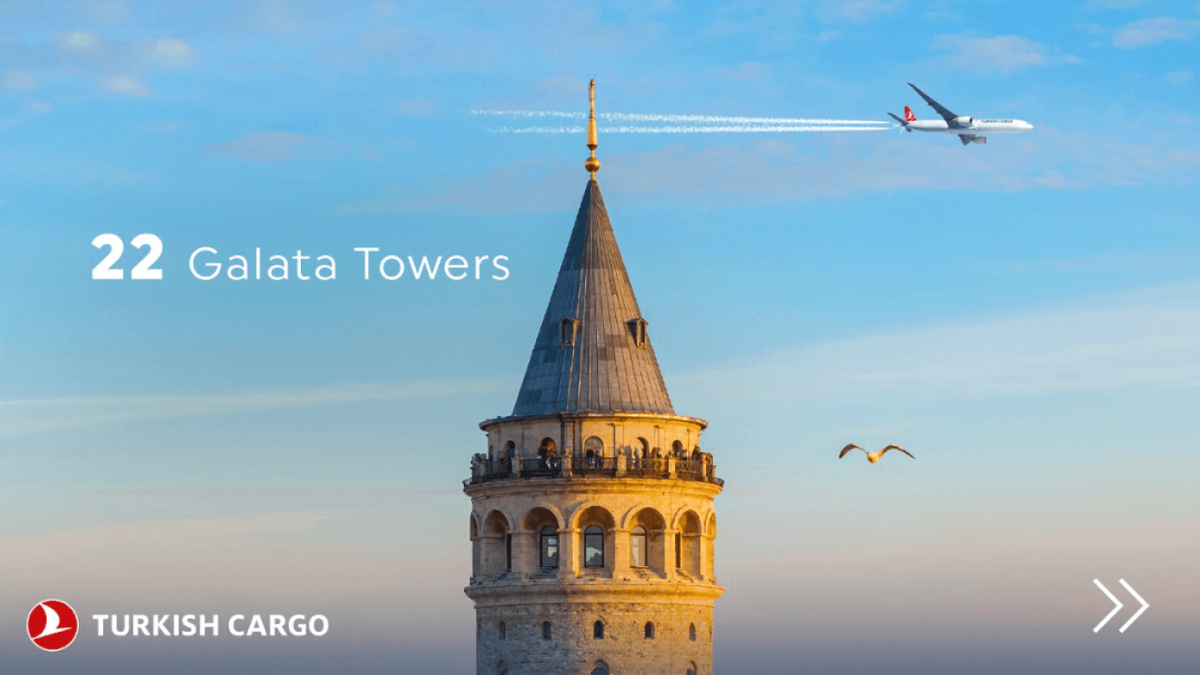


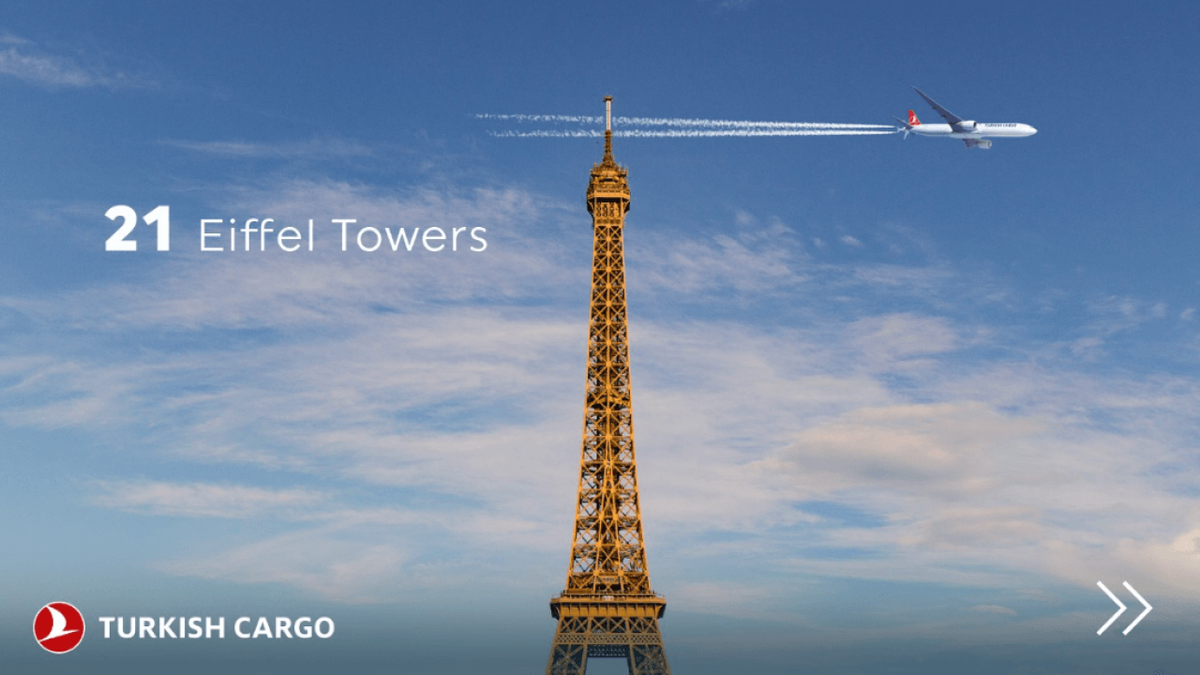
- Turkish Cargo’s latest campaign doesn’t just announce capacity—it visualises it. In a LinkedIn series that blends aviation and culture. The airline translates the 220,000 tonnes of additional lift from its four new freighters into familiar architectural icons: 977 Statues of Liberty, 21 Eiffel Towers, 55 Tokyo Towers, and 22 Galata Towers.
Each image features a Turkish Cargo aircraft soaring above the respective monument, with contrails cutting across a clear sky—linking the abstract concept of “tonnes” with concrete, instantly recognisable symbols. It’s a striking move for a cargo carrier, and one that signals a more modern, accessible approach to industry communication.
Rather than leaning on technical figures or fleet specs, the visuals appeal across audiences: clear enough for a general viewer, yet resonant for the logistics world, where scale and reach are everything.
The campaign also subtly reinforces Turkish Cargo’s global ambitions, using monuments from key freight and transit markets: the U.S., Europe, Japan, and Türkiye. It positions the brand not only as a heavy-lift player, but one that thinks creatively about how to tell its story.
“More freighters mean more cargo to carry and more destinations to reach,” Turkish Cargo said in a recent statement.
The airline already transports over 2 million tonnes of air cargo annually and serves more than 350 destinations across 134 countries—an unusually wide footprint for a combination carrier.
The fleet expansion coincides with an even more ambitious infrastructure plan. On January 2, Turkish Airlines announced an investment of over $2.3 billion to construct what it calls “the world’s largest cargo terminal and inflight catering facility.”
While the exact location has not been confirmed, all signs point to Istanbul, home to both Istanbul Airport (IST), which handles most international traffic, and Sabiha Gökçen (SAW) on the Asian side. The project is expected to create 26,000 jobs, underscoring its national significance.
“Türkiye is growing, Turkish Airlines is soaring,” the airline announced.

