
American expands trans-Pacific fleet and network

American expands trans-Pacific fleet and network

American Airlines Cargo is focusing on expanding its network and fleet on trans-Pacific routes, having more than doubled its network in four years, managing director Asia & Pacific sales, Keijiro Ishii tells Air Cargo Week (ACW).

American serves eight Asia Pacific destinations with over 100 flights per week, with new services from Los Angeles including Tokyo Haneda and Hong Kong. The airline has applied to connect Los Angeles and Beijing, which is still subject to final approval from the Department of Transportation and the Civil Aviation Administration of China, and Ishii expects this route to be launched by the end of 2016.

Ishii says: “Overall, it should be a great year for our network, with the launch of three to four new routes, all for LAX, American’s biggest gateway on the West coast of the US.”

Customers will be able to benefit from American serving both of Tokyo’s airports, Narita and Haneda.

Ishii comments: “We have two great options for our customers in the greater Tokyo area and can serve multiple destinations, including additional interline and trucking options to ever more points of service within Asia and beyond. There are a lot of great options we can offer our customers!”

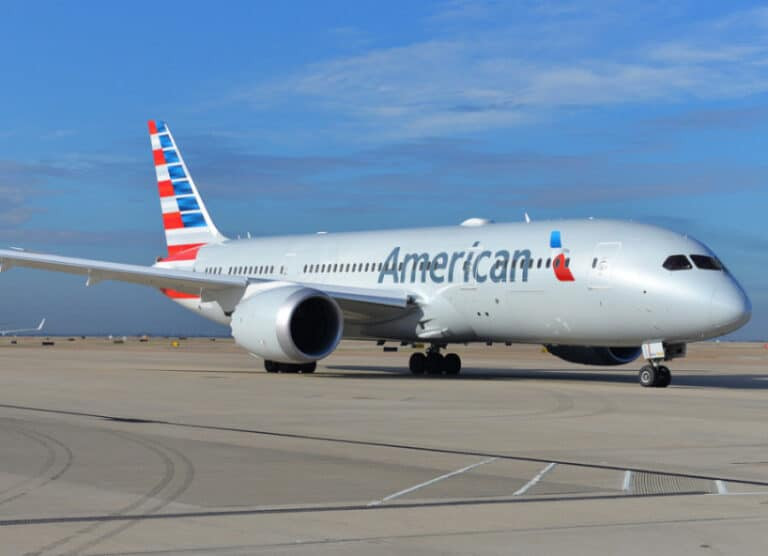
Customers have also benefitted from American upgrading Dallas Fort Worth services to Beijing and Shanghai and Chicago – Tokyo Narita flights to Boeing 787-800s, which offers a more stable payload due to greater fuel efficiency than the Boeing 777-200.

Ishii tells ACW: “Having such an efficient aircraft allows us to continue to expand our network, offering customers more and more choices out of Asia every year.”

“The ability to move cargo more frequently and efficiently from Asia to the US and beyond helps us offer customers more opportunities, especially for the shipment of temperature-controlled commodities.”

The Asia – Latin America trade lane is very important for American. Perishable and temperature sensitive shipments have benefitted from three temperature controlled rooms at Dallas Fort Worth, with one dedicated to pharmaceuticals, one to perishables and the other a transitioning room for shipments connecting quickly to their final destination.

Ishii says: “With these new options, we have the ability to ship a lot of new ad-hoc and regular business out of Hong Kong, Shanghai, Tokyo, Seoul and Beijing. The commodities we transport through these facilities include pharmaceuticals, semiconductors, material-moulding compounds, etc.”

Though there was strong export demand out of China last year, Ishii says there has been a shift to West Asian countries such as Indonesia, Vietnam, Myanmar, Cambodia and Laos due to cheaper labour costs. He says American will adapt to these changes, telling ACW: “Under such an unpredictable market in Asia/Oceania, we continue looking for more suitable export opportunities, and will also keep expanding our market territories with our GSA teams and interline partners to find new ways to feed the American Airlines network with more options within Asia, to the US and into Latin America.”


Picture of James Graham

James Graham

James Graham is an award-winning transport media journalist with a long background in the commercial freight sector, including commercial aviation and the aviation supply chain. He was the initial Air Cargo Week journalist and retuned later for a stint as editor. He continues his association as editor of the monthly supplements. He has reported for the newspaper from global locations as well as the UK.

subscribe to acw for free
stay informed. stay ahead

To get the latest air cargo news and industry trends delivered directly to your inbox, subscribe now!

Newsletter

Stay informed. Stay ahead. To get the latest air cargo news and industry trends delivered directly to your inbox, sign up now!

related articles

How Brazil’s gateway is repositioning itself as the Americas’ southern logistics anchor

Air travel in Southeast Asia is growing at a rate well above the global average. This has prompted the development of a new airport to serve as Cambodia’s new capital gateway. Cambodia has responded with Techo International Airport (KTI) – a landmark project by Cambodia Airport Investment Co. Ltd. (CAIC), a subsidiary of Overseas Cambodian Investment Corporation, in partnership with the State Secretariat of Civil Aviation (SSCA) – bringing world-class infrastructure and next-generation airport systems to the country’s new capital gateway. Replacing the former Phnom Penh International Airport, Techo International Airport opened on 9 September 2025 and represents the centrepiece of Cambodia’s aviation strategy. The airport is classified as a “4F-class” airport – meaning it can accommodate the largest cargo and passenger aircraft, such as Airbus A380 and Boeing 747, which allows large-scale cargo operations. According to plans, in its first phase the airport is expected to handle up to 175,000 tonnes of air cargo per year. Early official data cited indicates that the airport is designed for around 26,000 tonnes of cargo annually under initial operations. The large cargo-handling capacity (175,000 t/year) is significantly higher than the early-operation figure (26,000 t/year), which suggests the airport will scale up cargo operations as traffic increases. The airport’s infrastructure (runway, terminals, large-aircraft capability) positions it to support major international freight, enabling imports and exports of goods such as garments, agricultural products, electronics, helping Cambodia increase trade volumes. With large-aircraft handling, Techo can link to long-haul cargo routes around the world. Operational cargo logistics at Techo The airport now has a dedicated cargo terminal. Working hours for cargo operations are listed as 08:00 to 00:00 (midnight), seven days a week, though with flexibility depending on flight schedules. Customs operations are generally Monday–Friday 07:00–17:30 (with Saturday half-day), but clearance outside those hours can be arranged by prior coordination. As the airport has just opened, the full ramp-up of freight may take time. So the cargo-handling capability, a maximum of 175,000 tonnes a year, is a target rather than yet-achieved throughput. To give a scale of the planned operation, Cambodia’s three international airports collectively carried 75,000 tonnes of air cargo in the first 10 months of 2025.

Airfreight’s evolution: Improvisation to ambitious systemisation