
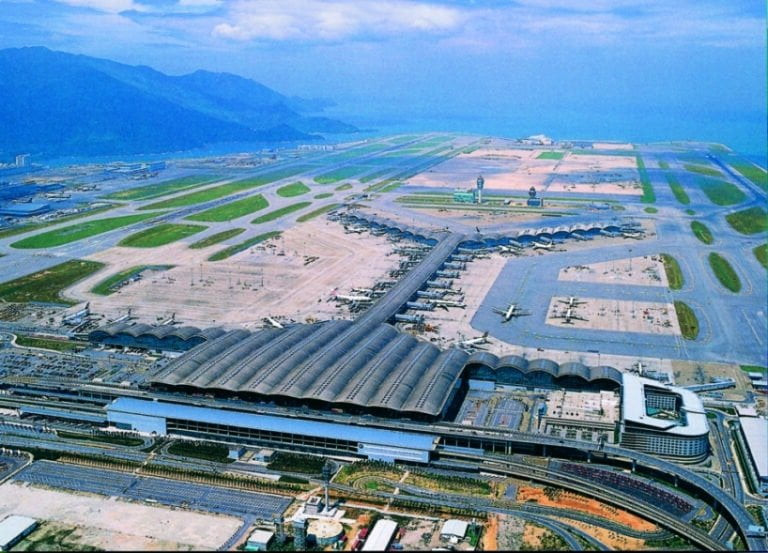
ACI World: Hong Kong retains spot as world’s busiest cargo airport

ACI World: Hong Kong retains spot as world’s busiest cargo airport

Hong Kong International Airport retained its spot as the world’s busiest cargo airport as the whole market registered modest growth of 2.6 per cent in 2015, Airports Council International (ACI) says.

In its 2015 ACI World Airport Traffic Report, the association reports that air cargo growth was slower than the passenger division due to subdued results in developing and emerging markets and modest recovery in advanced economies.

ACI World director general, Angela Gittens warns that the 2016 outlook faces impediments that could hinder growth such as geo-political and security concerns, capacity constraints and protectionist policies reducing economic integration.

Despite this, Gittens says: “Irrespective of the challenges that lay ahead, by and large, the evidence of history supports the long run resiliency of the industry where connecting people, places, cultures and commerce is paramount in the shared mission of the aviation community.”

According to ACI statistics, Asia-Pacific handled 41.1 million tonnes in 2015, up 2.3 per cent, North America grew 3.1 per cent to 30 million tonnes and Europe was the third largest region with growth 0.5 per cent to 18.9 million tonnes. The Middle East grew 9.9 per cent to 8.5 million tonnes, Latin America-Caribbean was down 1.3 per cent to 4.9 million tonnes and Africa was up 3.5 per cent to 2.1 million tonnes.

Hong Kong retained top spot with international volumes increasing 0.1 per cent to 4.38 million tonnes, followed by Dubai International Airport registering 3.4 per cent growth to 2.51 million tonnes, while Incheon International Airport was up 0.6 per cent to 2.49 million tonnes.

For domestic volumes, Memphis International Airport was top with 1.4 per cent growth to 4.1 million tonnes, followed by Louisville International Airport growing three per cent to 1.8 million tonnes and Beijing Capital International Airport increasing by 3.9 per cent to 1.2 million tonnes.


subscribe to acw for free
stay informed. stay ahead

To get the latest air cargo news and industry trends delivered directly to your inbox, subscribe now!

Newsletter

Stay informed. Stay ahead. To get the latest air cargo news and industry trends delivered directly to your inbox, sign up now!

related articles

How Brazil’s gateway is repositioning itself as the Americas’ southern logistics anchor

Air travel in Southeast Asia is growing at a rate well above the global average. This has prompted the development of a new airport to serve as Cambodia’s new capital gateway. Cambodia has responded with Techo International Airport (KTI) – a landmark project by Cambodia Airport Investment Co. Ltd. (CAIC), a subsidiary of Overseas Cambodian Investment Corporation, in partnership with the State Secretariat of Civil Aviation (SSCA) – bringing world-class infrastructure and next-generation airport systems to the country’s new capital gateway. Replacing the former Phnom Penh International Airport, Techo International Airport opened on 9 September 2025 and represents the centrepiece of Cambodia’s aviation strategy. The airport is classified as a “4F-class” airport – meaning it can accommodate the largest cargo and passenger aircraft, such as Airbus A380 and Boeing 747, which allows large-scale cargo operations. According to plans, in its first phase the airport is expected to handle up to 175,000 tonnes of air cargo per year. Early official data cited indicates that the airport is designed for around 26,000 tonnes of cargo annually under initial operations. The large cargo-handling capacity (175,000 t/year) is significantly higher than the early-operation figure (26,000 t/year), which suggests the airport will scale up cargo operations as traffic increases. The airport’s infrastructure (runway, terminals, large-aircraft capability) positions it to support major international freight, enabling imports and exports of goods such as garments, agricultural products, electronics, helping Cambodia increase trade volumes. With large-aircraft handling, Techo can link to long-haul cargo routes around the world. Operational cargo logistics at Techo The airport now has a dedicated cargo terminal. Working hours for cargo operations are listed as 08:00 to 00:00 (midnight), seven days a week, though with flexibility depending on flight schedules. Customs operations are generally Monday–Friday 07:00–17:30 (with Saturday half-day), but clearance outside those hours can be arranged by prior coordination. As the airport has just opened, the full ramp-up of freight may take time. So the cargo-handling capability, a maximum of 175,000 tonnes a year, is a target rather than yet-achieved throughput. To give a scale of the planned operation, Cambodia’s three international airports collectively carried 75,000 tonnes of air cargo in the first 10 months of 2025.

Shannon Airport Group begins €14m business park expansion