
DHL Supply Chain sees double-digit increase in agent retention rate

DHL Supply Chain sees double-digit increase in agent retention rate

DHL Supply Chain sees double-digit increase in agent retention rate

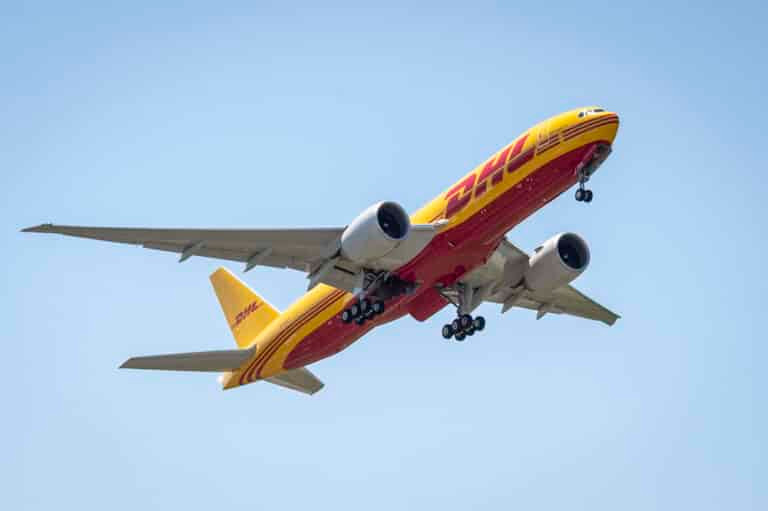
DHL Supply Chain reports it has accelerated its business expansion to meet a boom in demand for its services, while simultaneously increasing agent retention to a record high, with the help of a suite of Avaya OneCloud solutions.

Based in Singapore, DHL Contact Centre Services provides logistics solutions across a range of industries, including service logistics, technology, and public agencies. The Covid-19 pandemic created more opportunity to better support its customers’ increasing demand for fast and cost-effective contact centre services.

“As many businesses found during the pandemic, the last 18 months were characterised by a huge spike in demand for high-quality customer experience services. Between 2019 and today, alongside the rollout of Avaya OneCloud, our number of concurrent agents has increased 300%,” said Jerome Gillet, CEO, Singapore Cluster, DHL Supply Chain. “Retention in the contact centre industry has been a challenge for several years. With the support of a comprehensive, cloud-based collaboration tool, and an AI-powered contact centre, our retention rate has significantly increased to become the best-in-class in the industry.”

“The security and scalability of the product means we can replicate this customer service environment in other markets, enabling contact centre agents to log in from anywhere, at any time, and gain access to the communication and collaboration capabilities,” Gillet added. “In the near future, we will be scaling our contact centre offering to Japan, Korea, Australia, Malaysia and the Philippines.”

“DHL Supply Chain is oiling the wheels of businesses during an essential time, allowing it to meet demands that have only accelerated during and after the pandemic,” said Stephen Spears, Avaya Chief Revenue Officer. “Cloud-based customer service capabilities, automation and knowledge management are combining to deliver these offerings at a much quicker rate while supporting those charged with providing the service.”


subscribe to acw for free
stay informed. stay ahead

To get the latest air cargo news and industry trends delivered directly to your inbox, subscribe now!

Newsletter

Stay informed. Stay ahead. To get the latest air cargo news and industry trends delivered directly to your inbox, sign up now!

related articles

The titans of Pacific Rim air cargo: A 2026 business review

Air travel in Southeast Asia is growing at a rate well above the global average. This has prompted the development of a new airport to serve as Cambodia’s new capital gateway. Cambodia has responded with Techo International Airport (KTI) – a landmark project by Cambodia Airport Investment Co. Ltd. (CAIC), a subsidiary of Overseas Cambodian Investment Corporation, in partnership with the State Secretariat of Civil Aviation (SSCA) – bringing world-class infrastructure and next-generation airport systems to the country’s new capital gateway. Replacing the former Phnom Penh International Airport, Techo International Airport opened on 9 September 2025 and represents the centrepiece of Cambodia’s aviation strategy. The airport is classified as a “4F-class” airport – meaning it can accommodate the largest cargo and passenger aircraft, such as Airbus A380 and Boeing 747, which allows large-scale cargo operations. According to plans, in its first phase the airport is expected to handle up to 175,000 tonnes of air cargo per year. Early official data cited indicates that the airport is designed for around 26,000 tonnes of cargo annually under initial operations. The large cargo-handling capacity (175,000 t/year) is significantly higher than the early-operation figure (26,000 t/year), which suggests the airport will scale up cargo operations as traffic increases. The airport’s infrastructure (runway, terminals, large-aircraft capability) positions it to support major international freight, enabling imports and exports of goods such as garments, agricultural products, electronics, helping Cambodia increase trade volumes. With large-aircraft handling, Techo can link to long-haul cargo routes around the world. Operational cargo logistics at Techo The airport now has a dedicated cargo terminal. Working hours for cargo operations are listed as 08:00 to 00:00 (midnight), seven days a week, though with flexibility depending on flight schedules. Customs operations are generally Monday–Friday 07:00–17:30 (with Saturday half-day), but clearance outside those hours can be arranged by prior coordination. As the airport has just opened, the full ramp-up of freight may take time. So the cargo-handling capability, a maximum of 175,000 tonnes a year, is a target rather than yet-achieved throughput. To give a scale of the planned operation, Cambodia’s three international airports collectively carried 75,000 tonnes of air cargo in the first 10 months of 2025.

BTD launches Tracker 1 for Intermodal Container Security and Visibility