
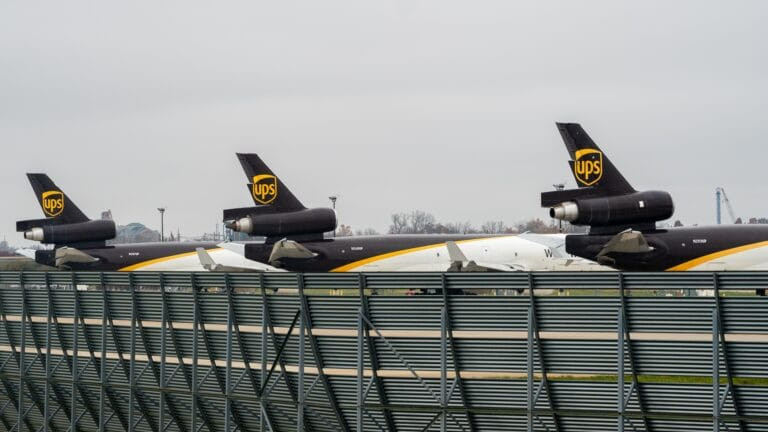
- UPS has now fully withdrawn all McDonnell Douglas MD‑11 cargo jets from its fleet, bringing to a close years of use for the three‑engine aircraft following the devastating November 4, 2025 accident in Louisville that killed 15 people, including the plane’s crew and several on the ground.
- Preliminary examination by the National Transportation Safety Board found evidence of fatigue cracking and structural weakness in the engine support assembly on the crashed MD‑11, raising concerns about the aging design and contributing to UPS’s decision to accelerate the retirement rather than return the type to service.
- The move fits into a broader shift in UPS’s air network toward more modern, efficient freighters such as Boeing 767s, with the company absorbing a significant financial write‑off and the industry watching how other operators respond to inspection directives and long‑term fleet planning.
UPS has announced the complete retirement of its McDonnell Douglas MD‑11 cargo aircraft, bringing to a close decades of service for the trijet in its global air network. The decision, confirmed in the company’s fourth‑quarter 2025 earnings release, accelerates a long‑planned phase‑out.
This comes months after UPS Airlines Flight 2976 crashed shortly after takeoff from Louisville Muhammad Ali International Airport on November 4, 2025. All three crew members aboard and 12 people on the ground lost their lives when the aircraft failed to climb and impacted an industrial area near the airport.
Investigation
In the aftermath of the Louisville accident, investigators from the National Transportation Safety Board (NTSB) said early findings pointed to fatigue cracks and structural weaknesses in components of the engine support structure. Those issues, not previously detected in routine maintenance, contributed to the in‑flight separation of the left engine, a rare but catastrophic failure that left the crew unable to maintain flight.
The Federal Aviation Administration grounded all MD‑11 aircraft shortly after the crash pending inspection and corrective actions, underscoring the seriousness of the safety concerns raised by the incident.
UPS had already been planning to phase out its MD‑11s in favor of more modern freighters, but the crash prompted executives to bring that timetable forward. During the earnings call, UPS leadership said the company had “accelerated our plans and retired all MD‑11 aircraft in our fleet.” The carrier also announced it will replace much of the lost capacity with deliveries of newer Boeing 767‑300F aircraft over the next year and a half.
Operational considerations
At their peak, MD‑11s made up about 9 % of UPS’s aviation fleet, predominantly flying long‑haul international routes. The retirement effort was completed in the fourth quarter of 2025, and the carrier took a non‑cash after‑tax charge of roughly $137 million in writing off the remaining aircraft.
UPS also faced increased costs during the holiday season while operations continued without the MD‑11s, leasing additional aircraft and relying more heavily on ground transportation to sustain peak‑period deliveries.
Company executives framed the decision not only as a response to the tragic accident, but as part of broader efforts to modernize UPS’s air fleet with aircraft that deliver improved fuel efficiency, reliability and lower maintenance costs.