
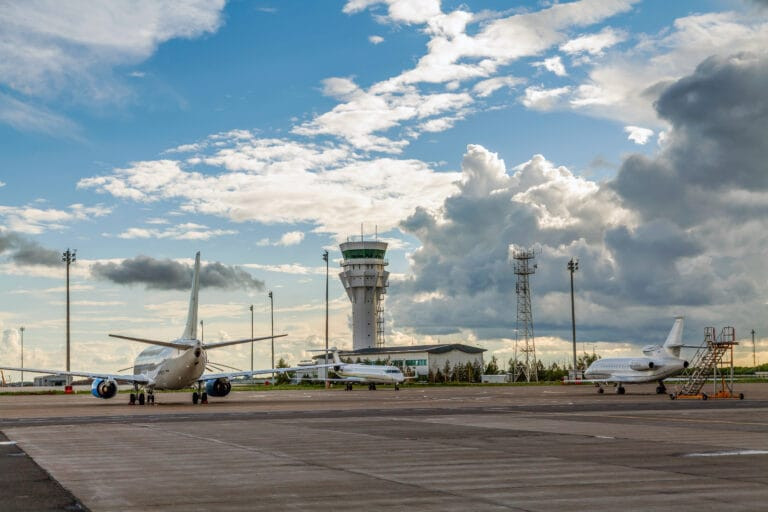
- Kazakhstan’s plan to launch its first national cargo airline has become politically sensitive after President Tokayev publicly questioned the government’s implementation approach and criticised bureaucratic delays
- The project was originally designed as a state-led carrier under Samruk-Kazyna and linked to the national railway system, but Tokayev has signalled openness to private sector participation or public-private partnership models
- Fuel price cuts and broader criticism of regulatory and infrastructure constraints indicate the airline debate is part of a wider push to improve competitiveness and shift away from rigid state-centric development models
Kazakhstan’s flagship initiative to launch a national cargo airline has become a focal point of political debate after President Kassym-Jomart Tokayev publicly questioned key aspects of the government’s implementation strategy, signalling possible shifts in how the project will be governed and supported.
The initiative, first confirmed in mid-2025, envisages Kazakhstan’s first state-branded air cargo carrier commencing operations in early 2026 with an initial leased fleet of three aircraft, expanding to a projected ten aircraft over time to capture a larger share of rapidly growing global air freight flows. The airline is part of a broader strategy to strengthen Kazakhstan’s position as a major Eurasian logistics and transit hub.
In government planning documents and official statements issued through 2025, the airline project has been closely managed by Samruk-Kazyna, the state welfare fund, and by extension linked to KTZ Express, a subsidiary of the national railway operator Kazakhstan Temir Zholy (KTZ). Under this model it would operate as a state-backed carrier, integrating with Kazakhstan’s expanding multimodal transport infrastructure.
Presidential critique
In recent weeks, President Tokayev has taken a noticeably more critical tone toward how the project has been pursued. At multiple high-level meetings on air cargo and logistics held in late 2025, he emphasised that while the cargo airline is strategically important, bureaucratic delays and structural constraints are undermining the government’s ability to capitalise on Kazakhstan’s geographic advantage between Europe and Asia.
Sources close to discussions report that Tokayev has urged officials to reconsider placing the airline solely within the remit of the state railway system, advocating instead for exploration of private sector involvement or alternative public-private governance models. This marks a noteworthy shift in emphasis, as earlier planning had centred on leveraging existing state-owned logistics infrastructure. The president’s comments — while not yet formal policy — suggest that Astana may be preparing to open the project to greater private capital and expertise to enhance operational efficiency and global competitiveness.
Alongside concerns about organisational structure, the president has also highlighted broader challenges facing Kazakhstan’s aviation and cargo sectors, including bureaucratic hurdles, high aviation fuel costs compared to regional competitors, and infrastructure bottlenecks that could deter transit traffic.
Fuel reforms
Responding to these concerns, the Ministry of Energy has promised reductions in aviation fuel prices after pressure from Tokayev over uncompetitive fuel costs, a key input for the nascent airline and wider cargo operations. State statements confirm that discussions have focused on bringing jet fuel prices in line with neighbouring countries to strengthen airports’ transit appeal.
Industry reporting corroborates these efforts: Kazakhstan recently cut the “into-wing” price of jet fuel supplied at airports to improve competitiveness, with some estimates indicating a reduction from around US$1,200 per tonne to about US$940, with further planned cuts. This adjustment is aimed at encouraging international carriers and logistics partners to utilise Kazakh hubs.
Strategic implications
The unfolding debate reflects broader economic policy tensions in Kazakhstan between state-led development models and market-oriented reforms. The cargo airline project remains a flagship component of President Tokayev’s vision for a multimodal logistics framework linking rail, road and air transport, with the objective of capturing a larger share of transit traffic between Asia and Europe by 2040.
However, Tokayev’s critique underscores growing impatience at perceived bureaucratic inertia and a desire to unlock private sector dynamism and foreign investment. Any formal shift toward private participation or public-private partnership in managing the national cargo airline — if adopted — would represent a significant recalibration of Kazakhstan’s approach to strategic infrastructure projects.